Showing posts with label Stand. Show all posts

8/19/2011

iProp iPad Stand Review


We’ve reviewed our share of iPad stands here on The Gadgeteer. Today I want to show you another iPad stand, but this one isn’t for your desktop, it’s an iPad floor stand called the iProp. The iProp is an adjustable stand that will allow you to use your iPad hands-free for watching movies, reading, or even as a musical stand.


Note: The images in this review can be clicked for a larger size.


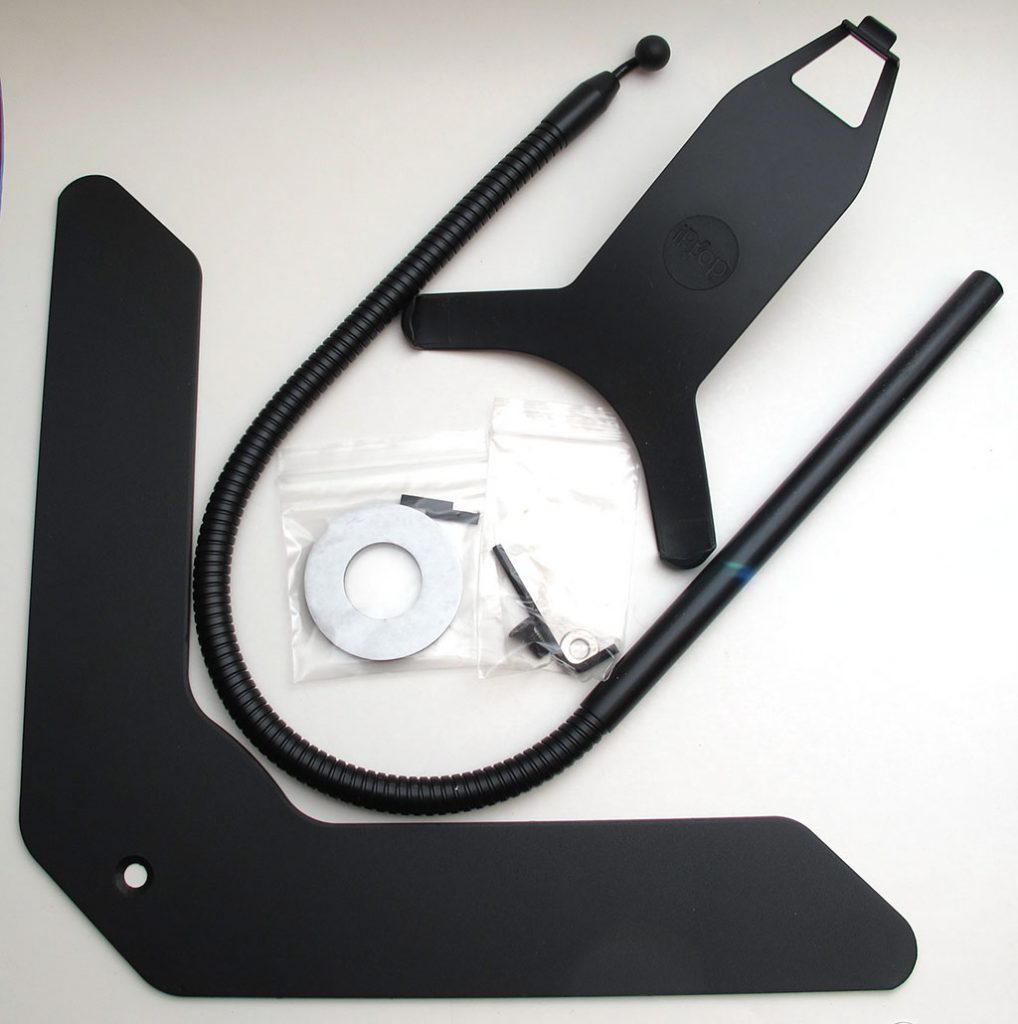
The iProp is comprised of 3 main parts. The heavy duty V shaped metal base, which weighs 3 lbs, the flexible gooseneck and the iPad holder. It ships unassembled, but don’t worry, assembly only requires 1 bolt. They even include the tool to tighten it.


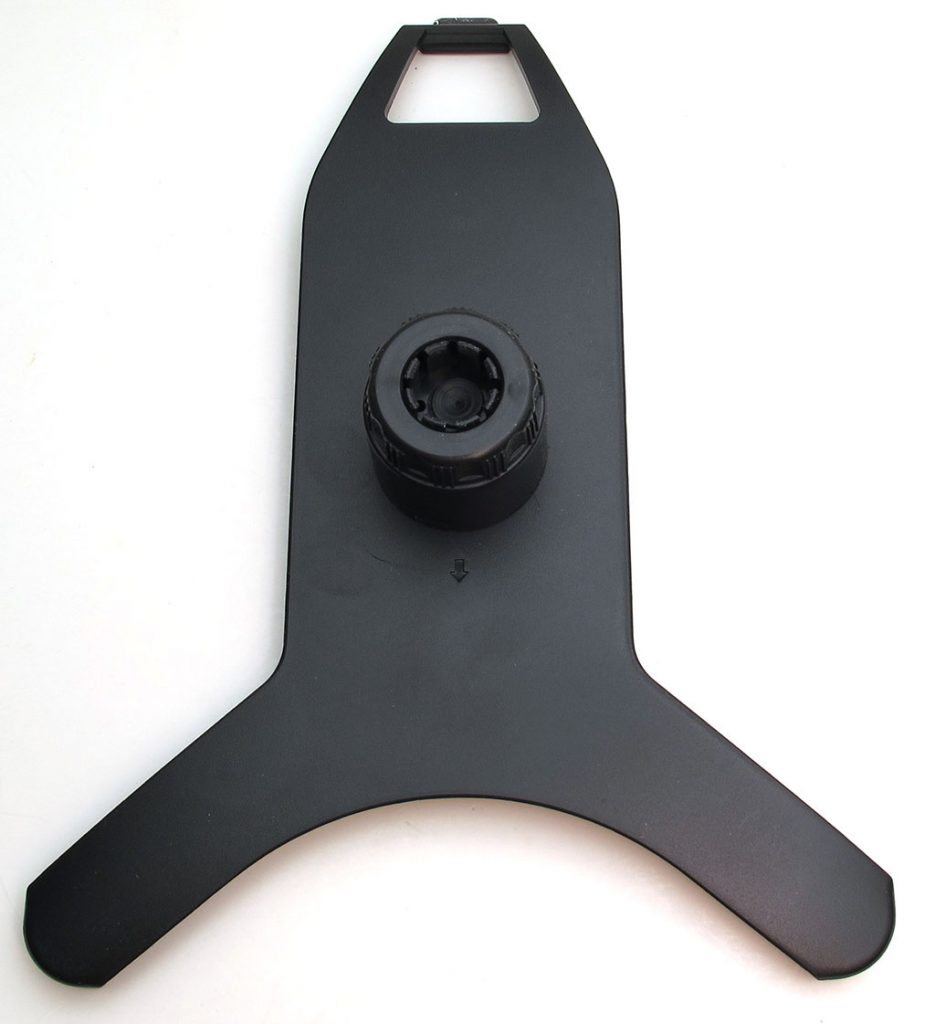
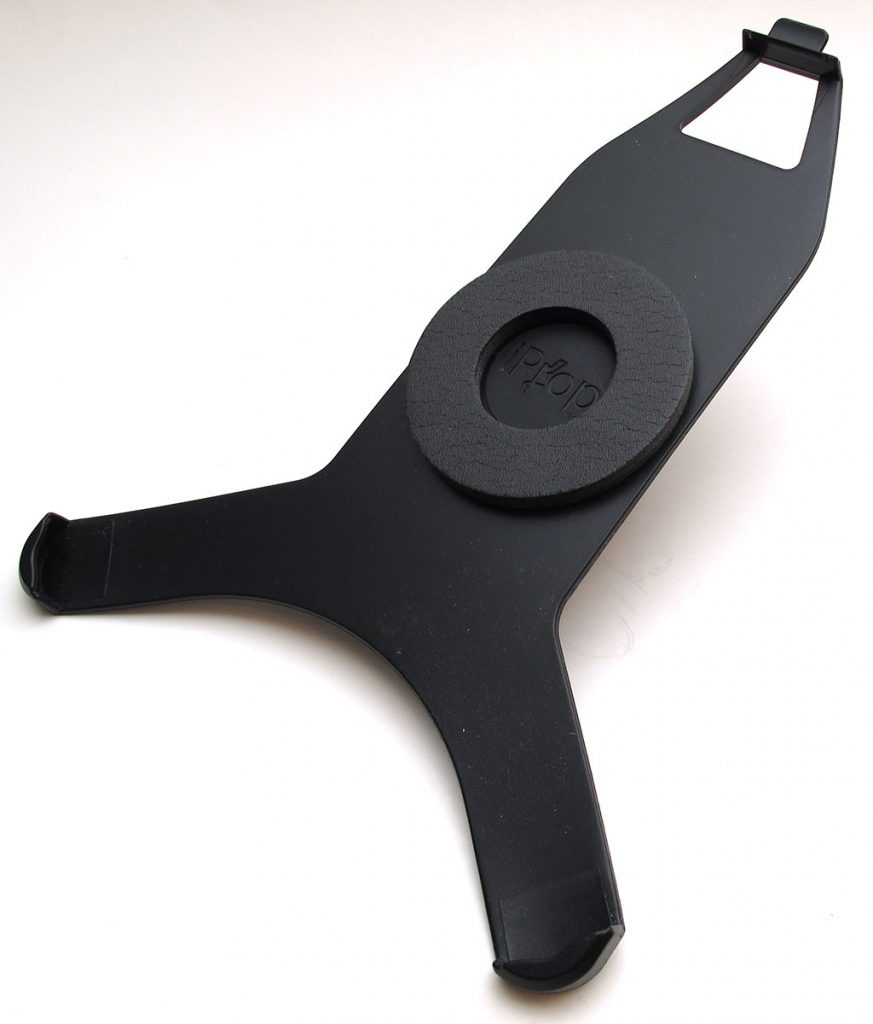
The iPad holder is made of black plastic. It holds the iPad by the bottom two corners and top edge.


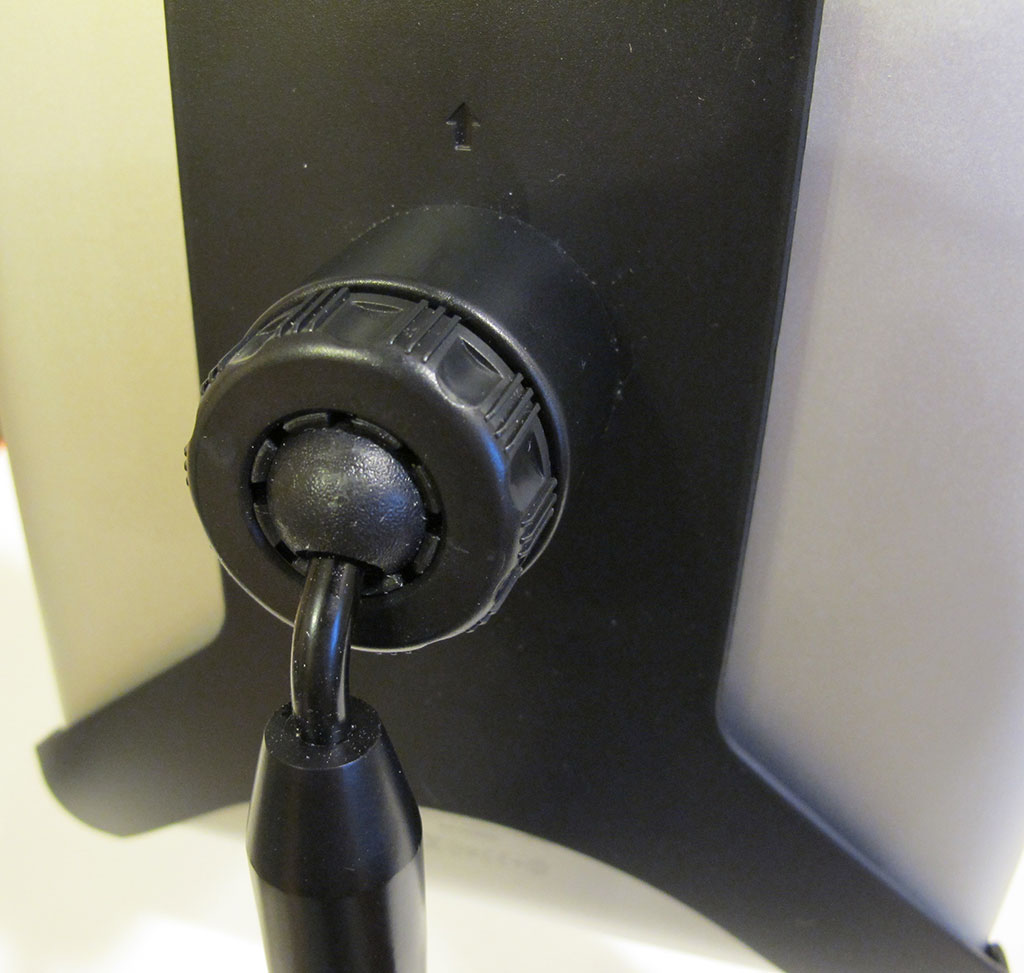
If you flip the holder over, you’ll see the ball and socket connector that is used to attach the holder to the stand. This connector allows you to rotate the iPad 360° as well as tilting it to almost any angle.


You can use the iProp with the original iPad and the iPad 2. To use it with the iPad 2, you’ll need to attach a stick on foam spacer to the back of the holder and small spacers to the corner holders.


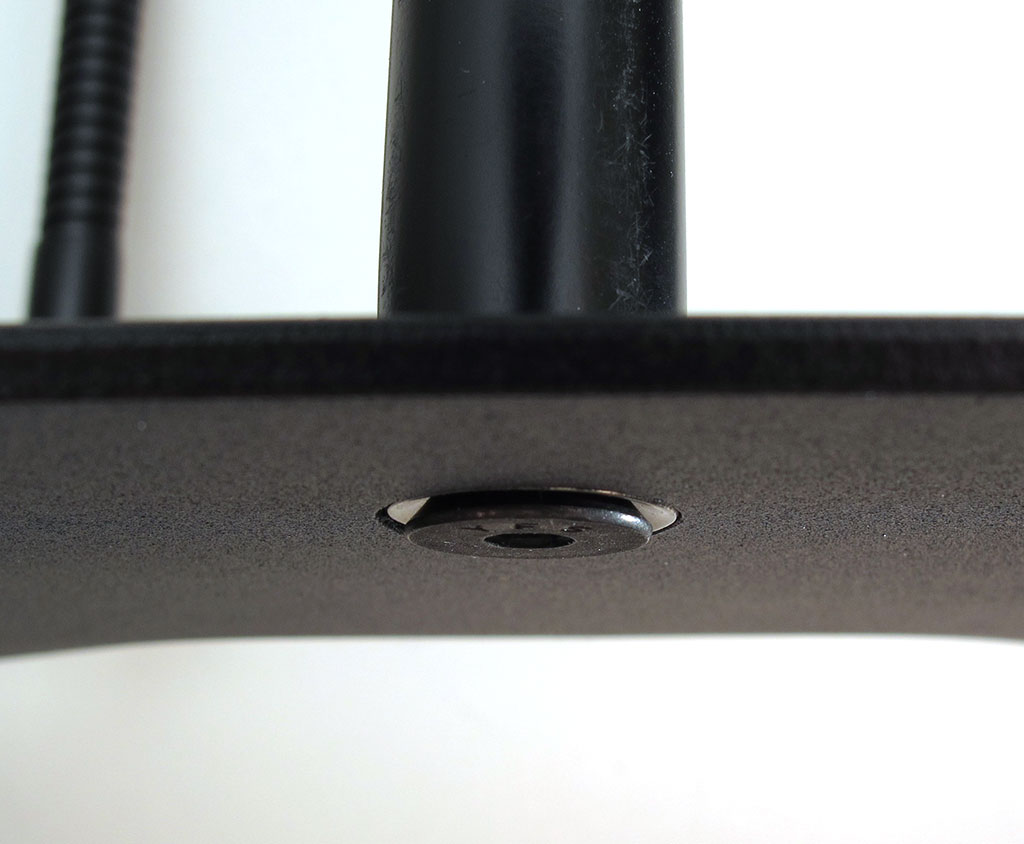
The only assembly required for this stand is to attach the flexible gooseneck to the base with the included bolt and washer. There’s an Allen wrench included to tighten it. The hole in the base is countersunk, and the instructions say to tighten the bolt flush with the base. As you can see from the image above, I wasn’t quite able to do that… Either I’m not strong enough (very possible right now…) or this is just as far as it will go. This isn’t a big deal if you intend to only use the iProp on a carpeted floor. But if you are going to use it on a hard wood floor, I’d be worried that this could cause scratches. I was surprised that there were no stick on feet included with the base.


Once you have attached the gooseneck to the base, you are ready to put the iPad in the holder and attach it. This is done by loosening the socket connector, sliding the ball into the socket and tightening it back down again. You can turn the iPad either in landscape or portrait orientation and adjust the angle of the screen. Once you’re done, tighten the socket connector to keep it in place. At this point, you can adjust the gooseneck, too, if desired. If you leave the gooseneck straight up and down, the stand is 36〃 high.

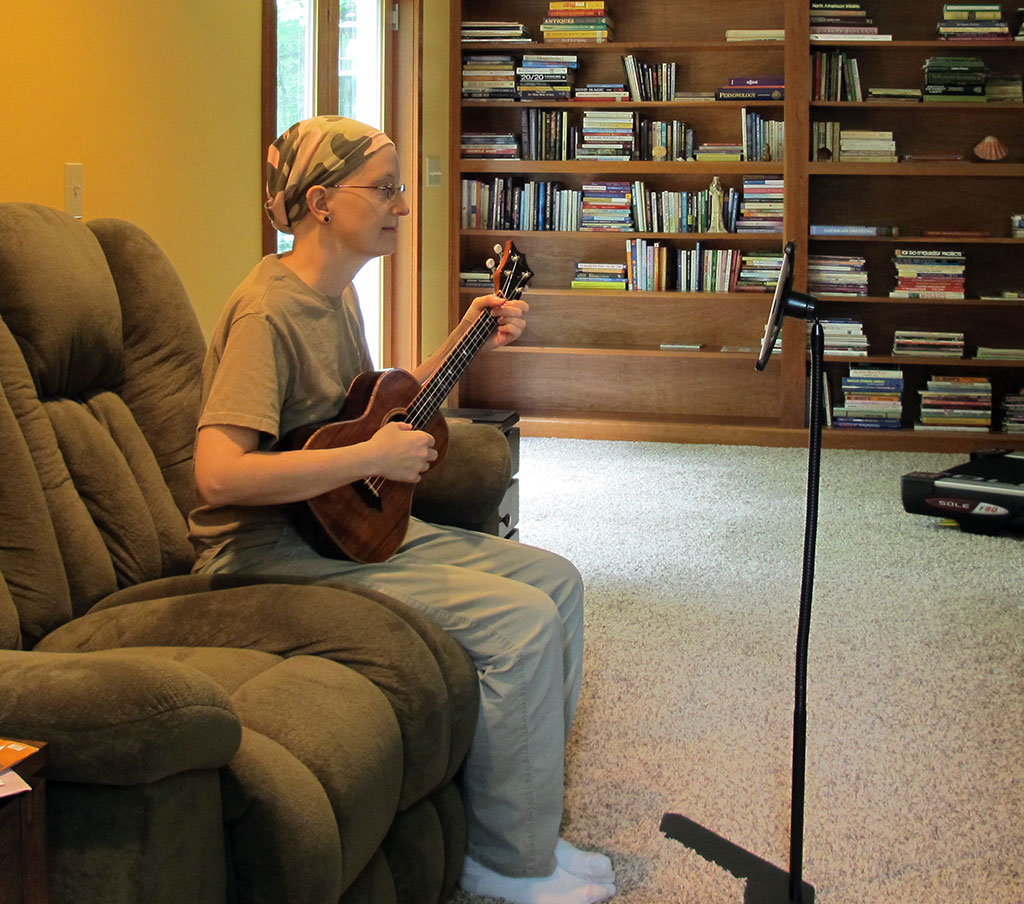
Forgive my lack of fashion. I didn't feel like changing my clothes for the picture.


I’ve found the iProp to be a great music stand. I can use the iPad with the TabToolKit app to let me easily view sheet music while I practice songs on my ukulele. It sure beats printing the music and putting it on my lap.


This stand is very sturdy and at 9 pounds, it is heavy enough that there is no worry that it will topple over. I can think of quite a few uses for it in addition to my own musical stand use. For example, it would be useful for watching movies and videos in bed or on the couch hands-free.


Other than the bolt on the bottom of the base, the only complaint that I have about the iProp is the price. You can buy a heavy duty stand for much less. Of course those stands don’t include an iPad holder like this one. Even so, I do think the iProp is overly pricey. On the plus side, they do ship free to anywhere in the US.

Sturdy Adjustable Works with iPad 1 and 2Hard (maybe impossible) to tighten bolt flush with base Bolt could scratch hardwood floors Need stand-off feet on base for more protectionTagged as: ,


View the original article here

6/06/2011

Will the Real iPad Competitor Please Stand Up

Apr. 24 2011 - 9:10 pm | 10,646 views | 1 recommendation |  Image via Wikipedia


Would-be iPad competitors are said to be feeling very discouraged about the prospects of competing with Apple’s iPad, with some reportedly opting to remain in wait-and-see mode.


It is easy to see why some firms might hesitate now: Not only is the iPad firmly entrenched in the tablet market, but the three devices thought best able to compete with it have come onto the market and then gone – right out of most consumers’ minds.


There is much to dislike about the PlayBook, as several reviews have pointed out, even though it posted a respectable first day sales tally of 50,000 units.


That figure, at least, put it ahead of other iPad competitors‘ first day track record, such as Samsung Galaxy Tab and Motorola’s Xoom, Computer World reported. Motorola’s Xoom, in particular, has racked up a lower-than-expected 100,000 in unit sales, according to Business Insider.


So what will it take for a device to at least give the iPad some competitive angst? I posed this question to Azita Arvani, principal of the Arvani Group, who came up with three – apparently still-elusive – qualities that such a gadget must have.


1) Said device cannot make the iPad look better in comparison;


2) Mobile carriers would have to all but be willing to commit homicide to promote it.


3) Its manufacturer needs to be prepared for a marathon.


What the device would look like, if not a pseudo iPad, Arvani doesn’t say. But the current strategy of mimicking the iPad’s concept, design and eco-system just flat out isn’t working and in fact, is only fueling the iPad’s value proposition.


“The initial Galaxy Tab was more like an oversized Galaxy S phone. The PlayBook has so many shortcomings in comparison to iPad, that even BlackBerry fans will have to think hard to go for it.”


Where’s the Forcing Function?


Meeting Arvani’s second point is likely to be even more elusive for manufacturers – certainly to a large extent it is out of their control.


With the initial iPhones, she explains, the limited distribution, mostly via exclusive deals with one carrier in each region, forced other carriers to find a way to compete. And what did they do? They formed strong partnerships that resulted in great smartphones, worthy of the iPhone competition, such as the strong Droid-branded products.


That catalyst is missing from iPads, for the most part, she says. “In the US, for example, the top two carriers sell iPads and there is not a forcing function for them to strongly get behind another tablet.”


The Long Haul


The third item, however, is well in reach of any company with the grit, that is, to see the process through.


The first Android phone, T-Mobile G1, with Android 1.0 was not a big success, Arvani points out. “It was not until a few versions with Android 2.0 and Motorola Droid, that Android phone became a real competition. So, while the first Android 3.0 tablets may be more like experiments, they can pave the way for a stronger foundation for future products.”


Pricing them lower, much lower, than they are now, would be a good start, she also said.


View the original article here

5/18/2011

PropUp: Ergonomic iPad holder and stand

 (Credit: Todd Andrews)

Just days after receiving his original iPad last April, designer and creative director Todd Andrews realized he needed a better way to hold his iPad for long periods of time. The result was an ergonomic iPad holder and stand that he calls PropUp.


Andrews started his design process by carving Nerf footballs and testing shapes for his idea. He switched to lovely green floral foam and eventually to a hand-carved version for his own personal use, all the while shaping the concept for PropUp.

(Credit: Todd Andrews)

After researching the manufacturing process, building a business plan for his product, and creating marketing collateral, Andrews is seeking funding help on Kickstarter to make PropUp a reality:


The money raised from Kickstarter supporters will be used to create final tooling, do a full production run of product and maybe fund a small amount of marketing.

Andrews sent me one of his test models to play with and I must say, it's a keeper. Since it arrived a few days ago, I haven't taken it off my iPad 2, even though PropUp was originally designed for the first iPad. The foam construction makes it lightweight and comfortable to rest on your lap for long periods of time and gives it enough flex to easily pop your iPad (original or 2) in and out.


The angle seems to be perfect for propping the iPad on the table and typing out those quick tweets or Facebook updates while I work on my MacBook Pro and take calls on my iPhone. Its simplicity seems to be key, with its only real flaw being that its ability to stand up is restricted to landscape orientation.


All in all, this is one of the better accessories I've seen running around for the iPad. And the best part about PropUp is that you can help be a part of its success. Head on over to Kickstarter and check out Andrews' video preview of PropUp and donate to help out (and get one).


Do you have a favorite accessory for the iPad or iPad2? Let me know in the comments!


View the original article here

4/30/2011

Review: Bweasel iPad Stand

 4.0 out of 5 Mice, Apr 8, 2011 This easel-inspired iPad stand is thin and light and offers multiple reading, typing, and viewing angles. When attached, it also provides a place to grip the iPad. However, it doesn't accommodate an iPad in a protective case.

By Jackie Dove, Macworld.com - April 8, 2011


The Bweasel is an unobtrusive, polished-black-metal accessory that weighs only about 3 ounces, making it ideal for travel. But unlike most easel-style stands, the Bweasel is designed wrap itself around your iPad to serve as a secure holder and stand—if you’re toting the tablet from one room or office to the next, you can use it as a carrier to distribute the iPad's weight on your hand or arm as you walk around, without risking it crashing to the floor.


I admit I was a bit leery of pulling the device onto my iPad, because it takes some muscle to get it properly positioned (and you'll want to keep the bottom brace well away from the iPad's Side Switch). In fact, the simple-looking contraption has enough swinging, moving parts to inspire at least a passing glance at the instruction manual. And the Bweasel moves tightly on the iPad’s back and glass front of the tablet in a way that rather alarmed me at first. Yet despite the tight fit, the stand does not mark or otherwise injure the iPad’s front or back.


(I used the original Bweasel with a first-generation iPad. The company says it will be producing a version specifically made for the iPad 2—there’s no way to adjust the stand’s wraparound clips, so while the original iPad fits tightly in the vice-like Bweasel, the iPad 2 swims in the same space.)


Because of the tight fit, don’t bother trying to use the Bweasel with an iPad in any kind of case. On the other hand, the Bweasel itself is light and thin enough to slide into other iPad cases—specifically, sleeves, zippered sleeves, and bags and packs.


The beauty of the Bweasel is that its frame has a lever at the back that lets you prop the iPad—in landscape orientation—at practically any angle from bolt-upright to almost flat. The lever stability is accomplished by two screws that turn in opposite directions. I thought it would be a bit of a challenge to get the lever locked firmly enough to keep the stand stable, but I was able to type on the iPad's screen in a semi-upright position without feeling that the stand might topple over. I also placed the Bweasel/iPad combo on my knee and used it for reading and typing, and remained stable though it wasn't the most comfortable use.


Since the iPad's dock-connector remains exposed, you can plug in your dock-connector cable to charge or sync with the iPad in landscape orientation. In portrait orientation, however, there's not enough room to attach the cable to the bottom of the iPad unless you turn the iPad upside-down.


You can also use the Bweasel as a simple stand, without sliding it tightly onto the iPad, by folding the Bweasel's top clip back and setting the iPad "in" the lower clip. I actually preferred this approach, as it's easier to pick up the iPad and change its orientation without having to remove the tablet from the stand.


Any way you prefer to use it, the Bweasel is a valuable addition to your iPad, though I think its $30 price tag is rather steep.

Shop for the Bweasel Bweasel iPad StandSorry, the product you requested isn't currently available from any of our sellers. Please try the Bweasel website


View the original article here

4/20/2011

Bweasel IPad Stand

The Bweasel is an unobtrusive, polished-black-metal accessory that weighs only about 3 ounces, making it ideal for travel. But unlike most easel-style stands, the Bweasel is designed wrap itself around your iPad to serve as a secure holder and stand--if you're toting the tablet from one room or office to the next, you can use it as a carrier to distribute the iPad's weight on your hand or arm as you walk around, without risking it crashing to the floor.


I admit I was a bit leery of pulling the device onto my iPad, because it takes some muscle to get it properly positioned (and you'll want to keep the bottom brace well away from the iPad's Side Switch). In fact, the simple-looking contraption has enough swinging, moving parts to inspire at least a passing glance at the instruction manual. And the Bweasel moves tightly on the iPad's back and glass front of the tablet in a way that rather alarmed me at first. Yet despite the tight fit, the stand does not mark or otherwise injure the iPad's front or back.


(I used the original Bweasel with a first-generation iPad. The company says it will be producing a version specifically made for the iPad 2--there's no way to adjust the stand's wraparound clips, so while the original iPad fits tightly in the vice-like Bweasel, the iPad 2 swims in the same space.)


Because of the tight fit, don't bother trying to use the Bweasel with an iPad in any kind of case. On the other hand, the Bweasel itself is light and thin enough to slide into other iPad cases--specifically, sleeves, zippered sleeves, and bags and packs.


The beauty of the Bweasel is that its frame has a lever at the back that lets you prop the iPad--in landscape orientation--at practically any angle from bolt-upright to almost flat. The lever stability is accomplished by two screws that turn in opposite directions. I thought it would be a bit of a challenge to get the lever locked firmly enough to keep the stand stable, but I was able to type on the iPad's screen in a semi-upright position without feeling that the stand might topple over. I also placed the Bweasel/iPad combo on my knee and used it for reading and typing, and remained stable though it wasn't the most comfortable use.


Since the iPad's dock-connector remains exposed, you can plug in your dock-connector cable to charge or sync with the iPad in landscape orientation. In portrait orientation, however, there's not enough room to attach the cable to the bottom of the iPad unless you turn the iPad upside-down.


You can also use the Bweasel as a simple stand, without sliding it tightly onto the iPad, by folding the Bweasel's top clip back and setting the iPad "in" the lower clip. I actually preferred this approach, as it's easier to pick up the iPad and change its orientation without having to remove the tablet from the stand.


Any way you prefer to use it, the Bweasel is a valuable addition to your iPad, though I think its $30 price tag is rather steep.


For more Macintosh computing news, visit Macworld. Story copyright c 2011 Mac Publishing LLC. All rights reserved.


View the original article here

4/18/2011

Ultra Impact IPad Stand

Ultra Impact's iPad Stand is a simple stand made out of recycled Bamboo and designed to be a sturdy hunk of desk furniture-you can even get it engraved. At 6 inches wide, 6 inches deep, and 2 inches high, you'll probably want to use the stand at home or the office rather than carrying it around in your bag, although it's light enough, at just over six ounces, to tote along in a pinch.


The Stand is limited to propping your iPad in either of two positions, each supporting landscape and portrait orientation: propped up at an approximate angle of 75 degrees for viewing video or photos or for using an external keyboard, or laid back (at around 35 to 40 degrees) for typing. Unfortunately, the iPad Stand's grooves for the prop-up position aren't wide enough to accommodate an iPad in most protective cases, though it does fit an iPad 2 with a Smart Cover or either iPad model with a slim cover.


The stand itself is mostly smooth and polished, but I was a little concerned that the rough edges of the grooves could scratch the iPad's front glass if a sudden movement (like your cat walking across the table) destabilizes it. Also, at least one of our review sample's rubbery "bumpers"-designed to protect the back of the iPad when it's in the typing position-had fallen off, increasing the possibility of the stand itself scratching the back of the iPad.


When sitting in the iPad Stand in landscape orientation, you can connect Apple's dock-connector cable for charging and syncing; in portrait orientation, however, there's not enough room to attach the cable to the bottom of the iPad unless you turn the iPad upside-down.


While durable, sturdy, and fairly serviceable, the iPad Stand is a bit bulky, and it's less flexible and elegant than some other stands I've seen.


(Ultra Impact also sells the iPad Stand in black plastic.)


For more Macintosh computing news, visit Macworld. Story copyright c 2011 Mac Publishing LLC. All rights reserved.


View the original article here

2/12/2011

Portable Computer Table Guide - The Best Computer Stand Or Table For Home


If you are looking for a portable computer table or mobile computer desk, this article offers an insightful look into some of things to look for when choosing a portable computer table for home. A mobile computer desk for home is a versatile and practical piece of home furniture. The best ones strike the perfect balance between form and function. Not only are they sleek and efficient, but they're also easily stowed when not in use, which makes them an ideal addition to any home or office where space is at a premium.

Benefits of a Mobile Computer Desks Or Tables

There are many benefits to equipping your home or office with mobile computer desks. The main benefit of course is that they help you to eliminate multiple desks, tables and stands thanks to their compact yet functional and efficient design. A portable computer stand will typically allow you to consolidate your full size desktop or laptop, monitor, keyboard, mouse, printer, scanner or other peripherals all into one compact unit. Not only does this allow you to reclaim valuable space, but it also helps to reduce clutter and eliminates the need to run cables everywhere.

They also have another key benefit as well. When they're not in use, you can free up even more space by folding them up and stowing them under the bed or wheeling them into closets and other small spaces. You simply can't do that with traditional computer workstations.

Buying Portable Computer Tables For Home - What to Look for

There are so many different makes and models of computer tables on the market that it's no wonder many consumers become frustrated and overwhelmed by all of the choices. Fortunately there is an easy solution. If you want to quickly sort through the maze of computer tables on the market, break the search process down by focusing on these four key elements:


Type - while they may be called by the same name, mobile computer desks from different manufacturers can be vastly different. Some may resemble breakfast or "TV dinner" trays that hold a laptop and little else, while others hold an entire desktop, monitor and peripherals, so don't rely on the name alone; always make sure you know exactly what you're getting.
Portability - it's a given that portable computer tables should be portable but some are more so than others. Ideally you want a design that features wheels, which makes it easy to relocate while in use and a folding or compact design that allows it to be easily stowed when it's not.
Material - portable furniture will typically experience more wear and tear than stationary units, which means that it's important to take the material into consideration when making your choice. Avoid units made with cheap plastic. High quality sturdy plastic, wood composite board or even steel tables could work.

Remember, while portable computer tables have many benefits, they're not all created equal. To ensure that you find the right one for your needs, take your time and sort through the crowd using the criteria above. Investing a little time into browsing through other reviews and websites to get a good sense of the items offered will pay long term dividends as you get to fully enjoy the long term benefits choosing the ideal table.


For more reviews on portable computer desks, check out the mobilecomputerworkstations.net website. Learn more about various portable computer cart models that could address your needs best.